

If you’ve been in a serious truck crash, you probably assume the motor carrier or commercial truck driver carries enough insurance to cover your damages. The truth is that many truck drivers, and even motor carriers with large fleets of semi trucks, only have the federally mandated minimum amount of liability insurance.
If that is the case, you may find yourself unable to recover the full value of your claim. Thankfully, there are some steps you can take to protect yourself.
Have you been injured in a truck or car accident? Call The Law Offices of Peter M. Anderson, Colorado Truck Accident Lawyer at 303-444-1505
The Best Truck Accident Attorneys All Agree: Semi-Truck Crashes Are Not Like Regular Car Accidents
Source: USDOT
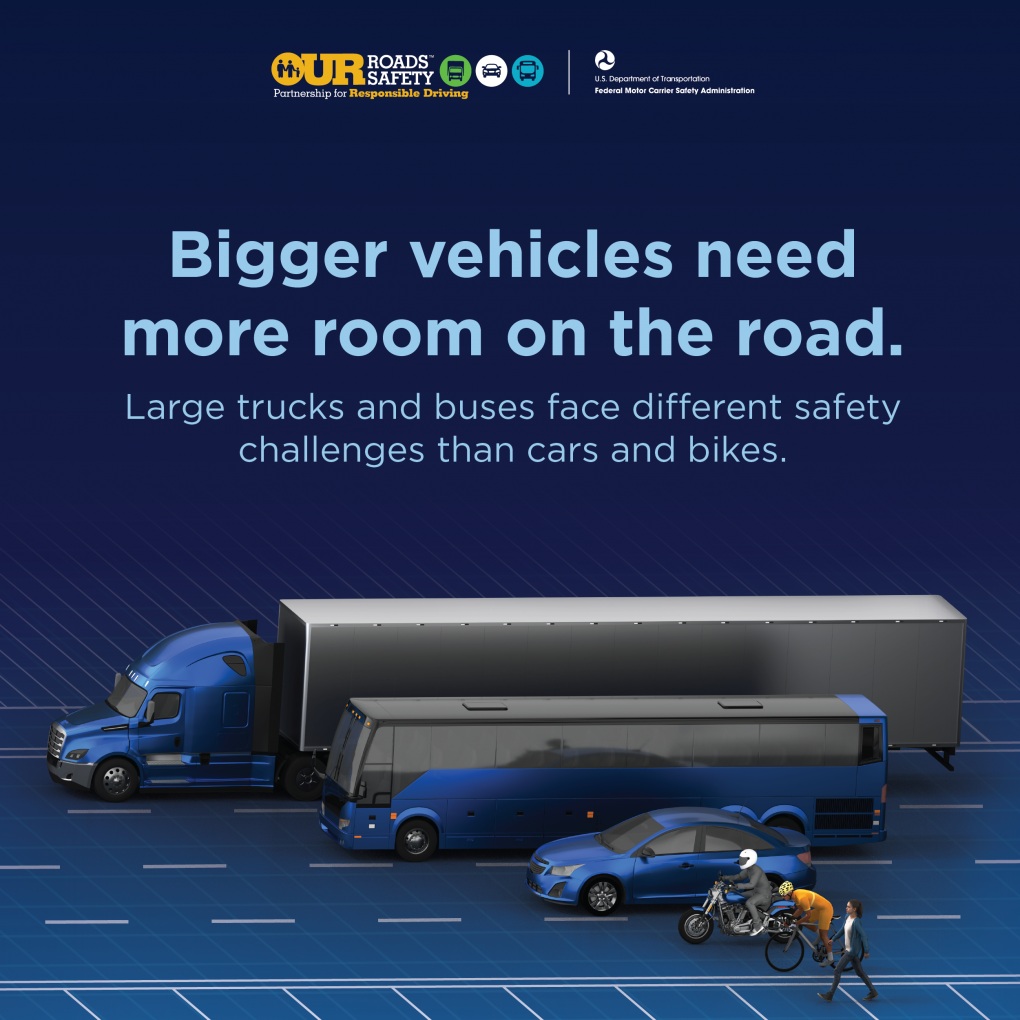
The best attorneys understand that truck crashes require different handling than regular vehicle accident cases. The forces in these crashes, even at low speeds, are much greater than in a typical car crash. Semi trucks or other commercial vehicles, like dump trucks or box trucks, are bigger and heavier than the largest passenger vehicles.
A fully loaded tractor and trailer can weigh 80,000 pounds! That is 20-30 times the weight of many passenger cars. It can take these big rigs twice as long to stop, even in ideal conditions.
Extensive rules and regulations govern the trucking industry in the United States. These rules and regulations include not only specifications for things like limits on a truck driver’s hours of service and driver log guidelines to prevent driver fatigue, but also mechanical specifications for brakes or tire tread. Regulations even set the minimum level of insurance coverage for car accidents.
Federal law requires motor carriers and truck drivers to carry a minimum of $750,000 in liability coverage. Many truckers, owner operators, and trucking companies only carry this minimum as required by law. This includes individual long-haul drivers and even many larger shipping companies.
Truckers and motor carriers operate for higher and higher profit margins; obtaining only the minimum required coverage for car crashes is one way these corporations cut expenses. While $750,000 may sound like a lot of money, it is not enough commercial truck insurance for Colorado. Injuries and damages can be significantly higher in crashes involving commercial trucks like tankers and tractor-trailers – and could be in the tens of millions for wrongful death or catastrophic injuries like paralysis or amputation.
When You Are Injured In A Truck Crash, You Are Entitled to Three Different Types of Damages
Colorado law allows for the recovery of three separate types of compensatory damages when you or someone you care for and love is injured by a negligent truck driver. The three “buckets” of damages aim is to make you whole (i.e. an amount of money equals or places you as close as possible to the position/life you had before the crash). This is accomplished by providing you with compensation for the following:
1. Non-Economic Damages
2. Economic Damages
3. Physical Impairment and Disfigurement Damages
Each category addresses a distinct area of loss that someone can encounter following a serious truck crash.
Non-economic damages compensate for the human suffering, the pain, emotional distress and conditions like PTSD. Money makes up for the loss of lifestyle or opportunities missed, along with frustration, embarrassment, emotional and even psychological impact due to the car/truck crash injuries.
Non-economic damages have no guidelines set forth in statute. In the American civil justice system, people decide what it is worth to have a pain-free life; to have experiences/past times; to do what they love with the people they love; and to do it unencumbered by injury. At trial, jurors are asked to apply collective common sense to determine and calculate the amount of this non-economic damage – the human harms damage.
Economic damages encompass property damage, past and future medical expenses, past and future lost wages, funeral costs, and other economic losses from injuries caused by the crash. Easier to calculate than non-economic damages, these losses can quickly accumulate after a serious crash and can continue to build many years into the future. Given the often violent nature of accidents involving these large trucks and the serious physical damage they can cause, medical treatment can be necessary for months, years, and even decades into the future.
Physical impairment: Colorado law does not technically define the third bucket of damages in its pattern jury instructions; however physical impairment and disfigurement is a very important and distinct bucket of damages. In 2007, the Colorado Supreme Court in Pringle v. Valdez discussed the historic aspect of physical impairments and noted physical impairment “damages are often the most serious and damaging consequences of a defendant’s negligent conduct.” The principle that a victim is entitled “to have a sound body and mind throughout his or her life” provides the rationale for this distinction. Colorado case: Minzer et. al.
Following the guidelines of the U.S. Constitution, guaranteeing “life, liberty and the pursuit of happiness”, a person deserves to have a sound body and mind throughout his or her life. This is often impossible when car crash injuries result in physical changes (amputations, chronic pain causing ambulatory issues, etc.) or disfigurement (scarring, limp, etc.) – compensation is the only tool available to help make up for that loss. Physical impairment also encompasses injuries like traumatic brain injuries that can dramatically affect quality of life.
When you are injured in a truck crash, the trucker’s or motor carrier’s insurance policy must cover all three categories of damages. The non-economic, economic, and physical impairment damages in catastrophic cases can easily exceed the policy limits of larger commercial insurance policies. With recent changes to Colorado’s damages caps, many commercial trucking companies are about to find themselves grossly underinsured.
Colorado’s Damages Caps Gave Negligent Trucking Companies Some Cover, But That Changed In 2025
Colorado, like many other states, has placed caps on the amount of damages injured people can recover in a lawsuit. In Colorado, the only cap is on non-economic damages. The law capped non-economic damages at $613,760 in crashes that occurred after January 1, 2020. The cap was automatically adjusted for inflation to $642,180 for crashes that happened in 2023 and $729,790 for crashes in 2024.
In 2024, the Colorado Legislature passed House Bill 24-1472, which increased the damages caps for non-economic damages available in negligence, wrongful death, and medical malpractice claims. The bill was signed into law on June 3, 2024, and took effect on January 1, 2025.
The new law raised the cap on non-economic damages for auto crashes from $729,790 to $1.5 million, and increased the caps on non-economic damages in wrongful death cases from $1,250,000 to $2,125,000.
This new law increased the non-economic caps significantly, doubling them in some cases. And while the caps and the new law only apply to non-economic damages, by increasing the amount an injured plaintiff can recover, a trucker’s $750,000 insurance policy will not cover all available damages.
IMPORTANT NOTE: There is a quirk in the new law regarding non-economic caps and the TIMING of when you file your lawsuit. The statute of limitations is three years for car crashes in Colorado.
So if you sustained an injury between January 1, 2023, and December 30, 2023, and you file in 2025, the cap is $1.5 million. But if you file on or after January 1, 2026, the cap drops to $642,180.
Similarly, if you were injured between January 1, 2024, and December 30, 2024, and you file your lawsuit in 2025, the $1.5 million cap applies. Wait until 2026, and the cap drops to $729,790.
You should never rush to take the first settlement offer made by an insurance company, but time is of the essence to file your truck accident case if you were injured between 2022 and 2024.
Consulting an experienced and knowledgeable truck crash attorney who is aware of the new law and the timing issues with recent claims is imperative. Hiring the best car crash attorney near you is an important step.
You Can Protect Yourself With Your Insurance Policy
You cannot know when or if you or your family members will be injured in a commercial truck crash, or whether the truck driver or motor carrier bought insurance beyond the bare minimum. But you can take steps to ensure you are protected both before and after such a crash.
Choosing the right insurance coverage options on your auto insurance policy is one way you can do that. All Colorado drivers should consider purchasing underinsured and uninsured motorist (UM/UIM) liability insurance for their peace of mind. Better yet, add in an umbrella insurance policy on top of the UM/UIM coverage.
Optional UM/UIM Coverage Can Protect You From Underinsured Drivers
UM/UIM insurance is optional car insurance that covers your damages and losses if you are in a crash with a driver who flees the scene, has no insurance, or does not have enough insurance to cover all of your injuries. UM/UIM insurance steps into the shoes of the other driver’s insurance when it is, as is often the case, insufficient to cover injuries, damages, and other losses from a serious crash.
While UM/UIM is optional, insurance carriers must provide you with coverage equal to the amount of insurance coverage you have for your liability unless you expressly decline the coverage in writing when purchasing your policy. Your insurer also must re-offer it to you whenever you change your policy limits down the road. While the minimum amount of UM/UIM coverage must match your bodily injury coverage, you would do well to increase that amount if you can.
UM/UIM coverage is essential to protect you and your family. Colorado is one of the top 10 states in the country for uninsured drivers. Studies estimate 17.5% of drivers in Colorado do not have any car insurance. And a significant number of those drivers, like truckers, carry only the state minimum UM/UIM coverage of $25,000 per person and $50,000 per accident. Purchasing your own UM/UIM policy can mean the difference between getting the treatment you need to recover from your injuries or trying to pay out of pocket for hundreds of thousands in medical treatment.
Umbrella Policies Provide Even More Peace of Mind
You can also purchase an umbrella policy that includes additional UM/UIM coverage. Umbrella insurance policies are another form of optional insurance that offers additional coverage when your initial policy limits are exhausted. An umbrella policy can provide you with a significant amount of additional coverage for not much additional cost. Generally, umbrella policies are limited to liability insurance, but you can purchase an umbrella policy with UM/UIM coverage as well.
This will be even more important now that Colorado has increased the damages caps, and many motor carriers, truckers, and other drivers remain unaware or unwilling to change their coverage.
As a victim of a truck accident, you need a law firm with experience and education in commercial truck accident cases. Attorneys at the Law Offices of Peter M. Anderson have the experience and education necessary to handle complex truck accident claims. Peter M. Anderson is board-certified in truck accident law by the Academy of Truck Accident Attorneys, one of only two such qualified in the state of Colorado. He can navigate the complex federal regulations applicable to your injury claims. He has a history of successfully holding negligent truck drivers and trucking companies responsible in serious truck crash cases. Call the Law Offices of Peter M. Anderson, Colorado Truck Accident Lawyer, at 303-444-1505 today.